



No products in the cart.
Return To Shop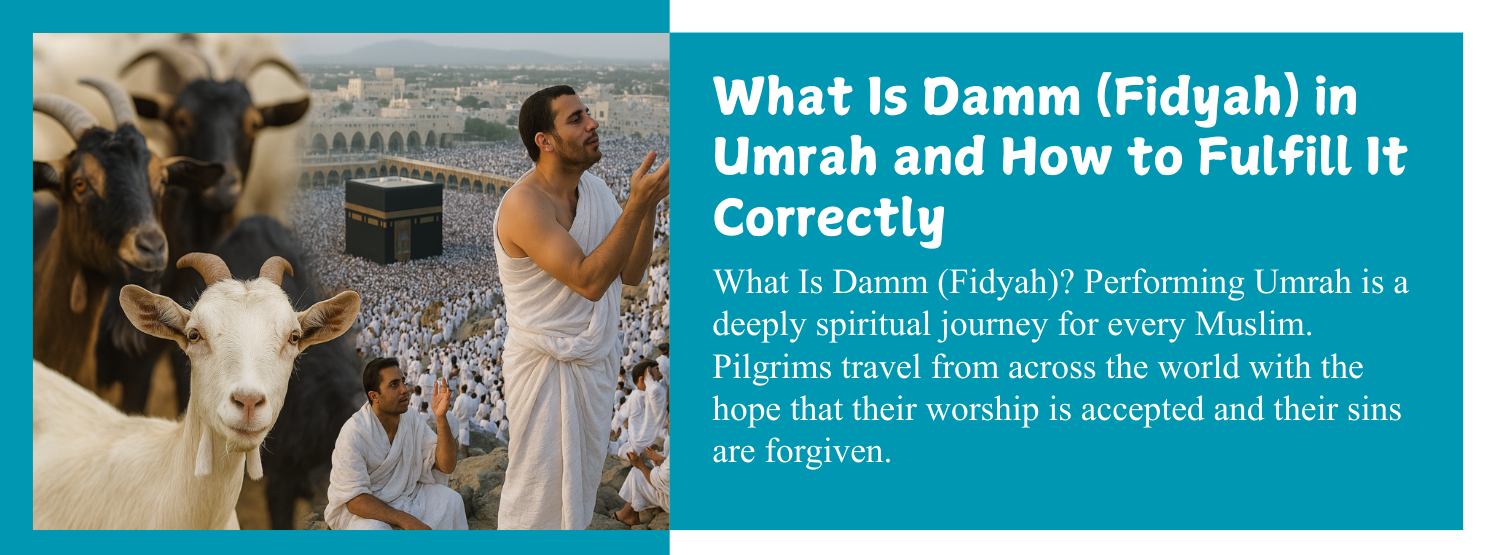
What Is Damm (Fidyah) in Umrah and How to Fulfill It Correctly
What Is Damm (Fidyah)?
Performing Umrah is a deeply spiritual journey for every Muslim. Pilgrims travel from across the world with the hope that their worship is accepted and their sins are forgiven. However, because Umrah has specific rules and obligations, mistakes can sometimes happen—often unintentionally. When certain violations occur, Islam requires Damm (also known as Fidyah) as a form of compensation.
Understanding what Damm is, when it becomes obligatory, and how to fulfill it properly is essential for every pilgrim. This guide explains Damm in a simple, clear, and practical way, especially for first-time Umrah performers.
Booking a Taxi from Jeddah Airport to Makkah
What Is Damm (Fidyah) in Umrah?
Damm refers to a mandatory sacrifice or charitable compensation required when a pilgrim commits specific mistakes or omissions during Umrah or Hajj. It is a form of penalty, but more importantly, it is a means of correcting the error and ensuring the Umrah remains valid.
In most cases, Damm involves:
Sacrificing a goat or sheep, or
Sharing the meat of a larger animal (cow or camel)
Distributing the meat to the poor and needy within the Haram area
Damm is not meant to punish pilgrims but to maintain the sanctity and discipline of the pilgrimage.
Difference Between Damm and Fidyah
Many pilgrims use the terms Damm and Fidyah interchangeably, but there is a slight difference:
Damm: Usually refers to animal sacrifice due to violations or missed obligations.
Fidyah: Can also include feeding the poor or fasting when sacrifice is not required or not possible.
In Umrah, the most common mistakes require Damm in the form of animal sacrifice.
Common Mistakes That Require Damm in Umrah
Here are some frequent situations where Damm becomes obligatory:
1. Violating Ihram Rules
If a pilgrim:
Applies perfume after entering the Ihram
Cuts hair or trims nails
Covers the head (for men) or face improperly
Wears stitched clothing (for men)
These actions may require Damm depending on the duration and severity.
2. Skipping or Delaying Ihram from Miqat
If a pilgrim crosses the Miqat boundary without Ihram, Damm becomes compulsory—even if Ihram is worn later.
3. Missing a Required Act (Wajib)
Examples include:
Not performing Sa’i properly
Leaving out a required step due to negligence
4. Shaving or Cutting Hair Before Completing Umrah
Hair cutting must only be done after Sa’i. Doing it earlier requires Damm.
How to Fulfill Damm Correctly
Fulfilling Damm must follow Islamic guidelines. Here is the correct process:
1. Type of Sacrifice
One goat/sheep OR
One-seventh share of a cow or camel
The animal must meet Islamic criteria for age and health.
2. Location Matters
The sacrifice must be performed within the Haram boundaries of Makkah. This is very important—Damm performed outside the Haram is not valid.
3. Distribution of Meat
Meat must be given to poor and needy people
The pilgrim cannot consume the meat
4. Proper Intention (Niyyah)
Damm must be performed with the intention of compensation for the specific Umrah mistake.
Challenges Pilgrims Face in Performing Damm
Many international pilgrims struggle with:
Finding trusted and authentic Damm services
Language barriers
Lack of time during Umrah
Fear of incorrect sacrifice
Uncertainty about Islamic compliance
This is why professional Damm service providers in Saudi Arabia are extremely helpful.
How UTS-KSA Helps Pilgrims Fulfill Damm Services
UTS-KSA offers reliable and Shariah-compliant Damm (Fidyah) services to ensure peace of mind for pilgrims.
Why Choose UTS-KSA for Damm Services?
✔️ Sacrifice performed within Haram boundaries
✔️ Fully Shariah-compliant process
✔️ Meat distributed to deserving beneficiaries
✔️ Transparent and trustworthy service
✔️ Ideal for international pilgrims
✔️ Can be arranged along with transport services in KSA
By using professional Damm services, pilgrims can focus on worship instead of worrying about logistics and compliance.
When Should Damm Be Performed?
Preferably during the Umrah trip
If missed, it can be performed later through authorized services in Makkah
Delaying unnecessarily is discouraged
UTS-KSA allows pilgrims to arrange Damm efficiently without disrupting their Umrah schedule.
Important Tips for Pilgrims
Learn Umrah rules before traveling
Ask scholars or trusted service providers if unsure
Keep Ihram guidelines in mind at all times
Use reliable Damm services to avoid mistakes
Always maintain sincerity and humility
Final Thoughts
Mistakes during Umrah can happen—even with the best intentions. Islam offers a merciful solution through Damm (Fidyah), enabling pilgrims to rectify their errors and complete their worship properly.
By understanding what Damm is, when it is required, and how to fulfill it correctly, pilgrims can perform Umrah with confidence and peace of heart. Trusted services like UTS-KSA play an important role in helping pilgrims fulfill their religious obligations accurately and conveniently.
May Allah accept every Umrah and make it easy for all pilgrims. Ameen.


Related posts

Why UTS KSA Is the Most Trusted Pick & Drop Service in Saudi Arabia | Reliable Transport in Saudi Arabia In today’s fast-moving world, dependable... Continue reading

Group Travel in Jeddah: Best Bus & Van Rental Options Planning group travel requires careful coordination, especially when it comes to transportation. Whether you are... Continue reading

How to Compare Car Rental Prices in Saudi Arabia for Maximum Savings Traveling across Saudi Arabia has never been easier. Whether you are visiting for... Continue reading

Dump Truck Rental in Riyadh: Affordable Heavy Transport Solutions The rapid urban development of Riyadh has created an ever-growing demand for reliable and efficient heavy... Continue reading

Umrah Transportation Services: Hassle‑Free Travel for Pilgrims Performing Umrah is a deeply spiritual journey that millions of Muslims undertake each year. Amidst all the planning... Continue reading
