



No products in the cart.
Return To Shop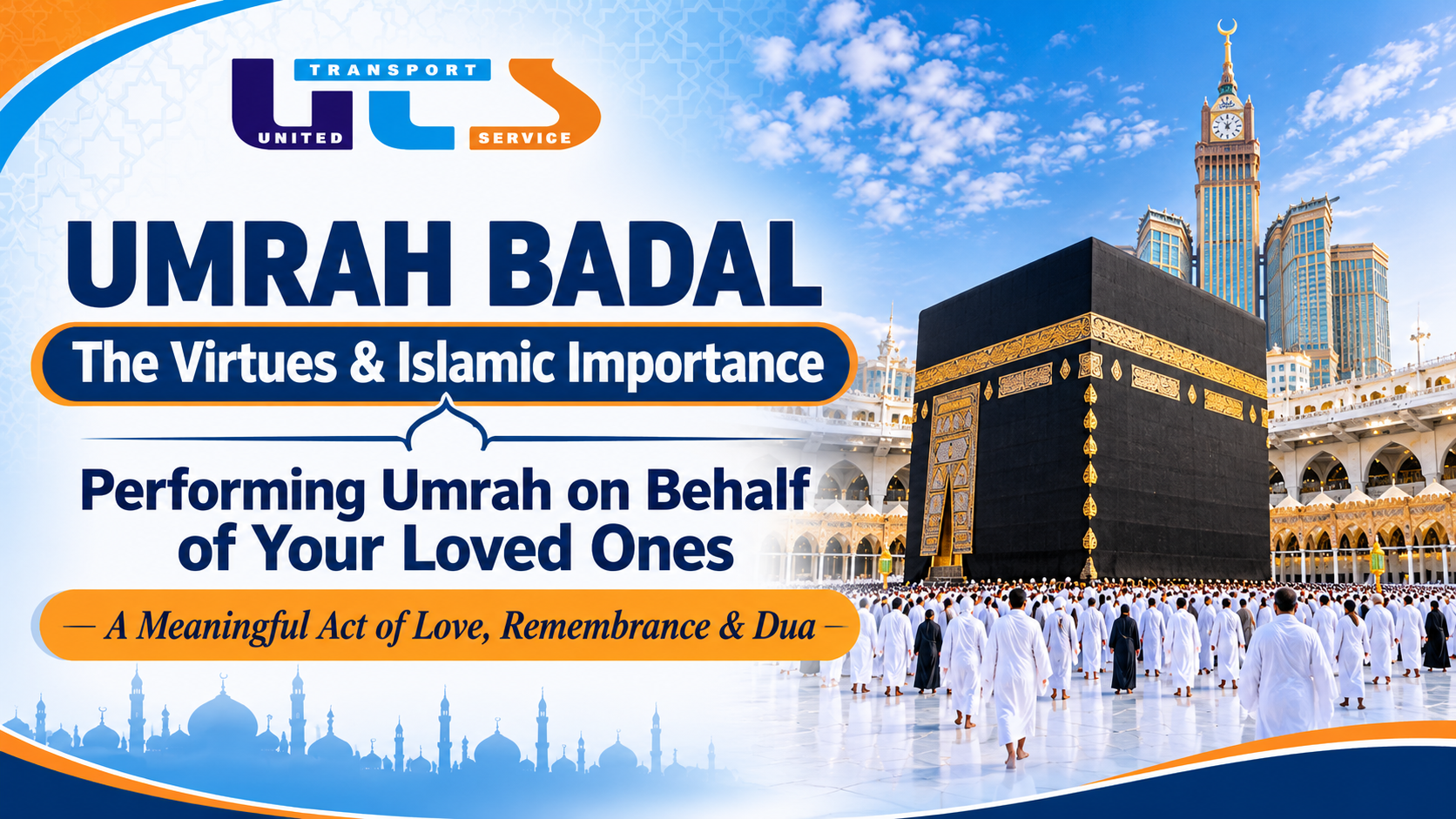
Umrah Badal: Islamic Virtues, Benefits & Proxy Umrah Guide
Umrah Badal: The Virtues, Islamic Importance, and Performing Umrah on Behalf of Loved Ones
Introduction to Umrah Badal
Umrah is one of the most meaningful acts of worship in Islam. It is a blessed journey to the Holy Kaaba in Makkah, where Muslims from every corner of the world gather to worship Allah, seek forgiveness, and strengthen their connection with their Creator.
For many Muslims, visiting the Holy Kaaba is a lifelong dream. However, some people pass away before fulfilling this wish, while others become physically unable to travel due to old age or permanent illness.
Islam provides guidance and mercy in such circumstances through a practice known as Umrah Badal (Proxy Umrah). It allows a qualified Muslim to perform Umrah on behalf of another person, particularly someone who has passed away or is permanently unable to perform the pilgrimage themselves.
For Muslims living in the United States, the United Kingdom, Canada, Australia, Europe, and other countries, Umrah Badal offers an opportunity to arrange this act of worship for their deceased parents, grandparents, and other loved ones.
Book Umrah Badal Service
What Is Umrah Badal in Islam?
Umrah Badal, also known as Proxy Umrah or Umrah on Behalf of Someone Else, refers to performing the complete rituals of Umrah with the intention of doing so on behalf of another Muslim.
The person performing Umrah makes the intention in the name of the individual they are representing and completes the prescribed religious rituals, including:
- Entering the state of Ihram.
- Making the intention for Umrah on behalf of the intended person.
- Performing Tawaf around the Holy Kaaba.
- Performing Sa’i between Safa and Marwah.
- Completing Halq (shaving the head) or Taqsir (trimming the hair).
The intention is an essential part of this act of worship. The person performing Umrah must understand that they are completing the pilgrimage on behalf of someone else.
Umrah Badal is particularly relevant for Muslims who wish to arrange this worship for deceased family members or relatives who are permanently unable to travel because of old age or chronic illness.
The Islamic Importance and Virtues of Umrah Badal
Umrah holds a special position in Islam. It is an act of worship that demonstrates submission to Allah, sincerity, patience, and devotion.
Although Umrah Badal is a specific form of performing Umrah on behalf of another person, its foundation is connected to the Islamic teachings that recognize certain acts of pilgrimage on behalf of deceased and physically incapable Muslims.
1. A Way to Honour Deceased Parents and Loved Ones
Losing a parent or loved one is one of life’s most difficult experiences. Islam encourages Muslims to continue showing kindness to their parents even after their death.
Arranging Umrah on behalf of a deceased parent can be a meaningful expression of love, respect, and devotion.
It provides an opportunity to perform an act of worship in their name while asking Allah to accept it and grant them His mercy.
2. Following the Sunnah of Prophet Muhammad (Peace Be Upon Him)
The permissibility of performing Umrah on behalf of someone unable to perform it is supported by authentic Hadith.
A man approached Prophet Muhammad (peace be upon him) and explained that his father was extremely old and unable to perform Hajj or Umrah.
The Prophet (peace be upon him) instructed him to perform Hajj and Umrah on behalf of his father.
Reference: Jami’ at-Tirmidhi, Hadith 930.
This Hadith demonstrates the importance of fulfilling the religious needs of loved ones who cannot undertake the journey themselves.
3. An Expression of Love, Compassion, and Family Responsibility
Islam places great importance on maintaining family relationships and showing kindness to parents and relatives.
Arranging Umrah Badal for a deceased parent or a permanently incapacitated family member reflects the desire to continue doing good for loved ones.
It is also an opportunity to make sincere Dua for their forgiveness, mercy, and place in Jannah.
4. A Means of Seeking Allah’s Mercy and Forgiveness
Umrah is an act of worship through which Muslims seek forgiveness and spiritual purification.
Prophet Muhammad (peace be upon him) said:
“An Umrah to another Umrah is an expiation for what comes between them.”
Reference: Sahih al-Bukhari 1773 and Sahih Muslim 1349.
This Hadith highlights the virtues of Umrah and its importance in a Muslim’s spiritual life.
The acceptance of any act of worship belongs to Allah alone, and Muslims should always make Dua for acceptance.
What Does the Quran Say About Umrah and Helping Others?
The Holy Quran emphasizes the importance of completing Hajj and Umrah for the sake of Allah.
Allah Almighty says:
“And complete the Hajj and Umrah for Allah.”
This verse highlights the significance of performing these sacred acts of worship with sincerity and devotion to Allah.
The Quran also emphasizes kindness towards parents and maintaining good relationships with family members.
Allah says:
“And lower to them the wing of humility out of mercy and say, ‘My Lord, have mercy upon them as they brought me up when I was small.'”
These teachings remind Muslims of their responsibility to honour their parents, remember them in Dua, and continue doing good deeds for them.
Who Can Benefit from Umrah Badal?
Umrah Badal is generally recognized as permissible for the following categories, subject to the relevant Islamic conditions:
1. Deceased Parents
Muslims can arrange Umrah on behalf of their deceased father or mother. It is a meaningful way to honour their memory and ask Allah to grant them mercy.
2. Deceased Grandparents
A person may arrange Umrah for a deceased grandfather or grandmother, following the applicable religious guidelines.
3. Other Deceased Relatives
Umrah Badal may also be performed on behalf of other deceased Muslim relatives, such as brothers, sisters, and other family members.
4. Elderly People
People who are alive but permanently unable to undertake the journey because of advanced age may be eligible for Umrah Badal.
5. People with Permanent or Chronic Illnesses
Individuals suffering from illnesses that permanently prevent them from travelling and performing the rituals may also qualify under the relevant Islamic rulings.
Important Islamic Guidance: Performing Umrah on behalf of a living person who is physically capable of performing it themselves is not generally permitted. There are also differences among scholars regarding certain voluntary cases. The person undertaking Umrah Badal should ordinarily have completed their own Umrah first. It is advisable to consult a qualified Islamic scholar for individual circumstances.
How Is Umrah Badal Performed?
The procedure for Umrah Badal follows the same essential rituals as an ordinary Umrah. The main difference is the intention made on behalf of another person.
Here is a simple explanation of the process:
Step 1: Make the Intention
Before entering Ihram, the performer makes a sincere intention to perform Umrah on behalf of the specified individual.
Step 2: Enter Ihram
The performer enters the state of Ihram at the appropriate Miqat and begins reciting Talbiyah.
Step 3: Perform Tawaf
The performer completes seven circuits around the Holy Kaaba.
Step 4: Perform Sa’i
Seven passages are completed between Safa and Marwah.
Step 5: Complete the Umrah
The performer completes the final ritual by shaving or trimming the hair, according to the applicable guidelines.
After completing these rituals, the Umrah is finished, Insha’Allah.
Why Muslims in the USA, UK, Canada, and Australia Choose Umrah Badal Services
Millions of Muslims live outside Saudi Arabia, including families in the United States, United Kingdom, Canada, Australia, and European countries.
Many of these families have parents, grandparents, or relatives who have passed away or cannot travel to Saudi Arabia because of health or age-related limitations.
International travel to Makkah can involve significant expenses, visa arrangements, accommodation, transportation, and physical challenges.
For this reason, Muslims living abroad may look for a reliable Umrah Badal service that can arrange the pilgrimage through a qualified person in Saudi Arabia.
A properly managed service can help international families by providing:
- Umrah Badal arrangements for deceased parents and relatives.
- Assistance with performing Umrah for permanently incapacitated individuals.
- Clear information about the process and Islamic requirements.
- Confirmation of the intended person’s name and details.
- Communication and updates regarding the arrangements.
- Transparency about the completion of the religious rituals.
The most important consideration is ensuring that the person performing Umrah is trustworthy, knowledgeable about the rituals, and genuinely fulfils the responsibility.
How to Choose a Reliable Umrah Badal Service
Choosing the right Umrah Badal service is important because it involves a religious responsibility and the trust of another family.
Before making an arrangement, consider the following factors:
- Religious Knowledge
Ensure that the person performing Umrah understands the essential requirements and Islamic rulings.
- Trustworthiness
Choose a service that works with reliable and responsible individuals in Saudi Arabia.
- Transparency
The service provider should clearly explain how the Umrah will be performed and what is included.
- Clear Communication
International customers should be able to communicate easily and receive relevant updates.
- Honest Confirmation
A reliable provider should give truthful confirmation once the Umrah has been completed. No service should promise guaranteed acceptance of worship, as that belongs to Allah alone.
Frequently Asked Questions
1. Can I perform Umrah on behalf of my deceased mother or father?
Yes. Performing Umrah on behalf of a deceased parent is supported by Islamic scholarly rulings. It is a meaningful act of devotion and kindness towards deceased parents.
2. Is Umrah Badal allowed for someone alive?
Yes, it can be permissible for a living person who is permanently unable to perform Umrah due to advanced age or a chronic illness from which recovery is not expected. Specific circumstances should be discussed with a qualified scholar.
3. Can a son or daughter arrange Umrah Badal for deceased parents?
Yes. A son or daughter can arrange Umrah on behalf of a deceased parent, provided the applicable Islamic conditions are fulfilled.
4. Does the person performing Umrah Badal need to perform their own Umrah first?
This is an important condition in commonly followed scholarly guidance. A person should complete their own Umrah before undertaking Umrah on behalf of another individual.
5. Can Umrah Badal be arranged from the USA or the UK?
Yes. Muslims living in the USA, UK, Canada, Australia, and other countries can arrange Umrah Badal through a trustworthy representative in Saudi Arabia.
6. Can Umrah Badal be performed for grandparents?
Yes. Umrah may be performed on behalf of deceased grandparents, subject to the applicable Islamic requirements.
7. Is Umrah Badal the same as regular Umrah?
The essential rituals are the same. The main difference is that the performer makes the intention to complete Umrah on behalf of another eligible person.
8. Is the reward of Umrah Badal guaranteed?
The acceptance and reward of every act of worship are determined by Allah. Muslims should perform the rituals sincerely and make Dua for Allah’s acceptance and mercy.
Conclusion:
Keep Your Loved Ones in Your Prayers Through Umrah Badal
Umrah Badal is a meaningful Islamic practice that allows Muslims to perform the sacred pilgrimage on behalf of deceased loved ones and those who are permanently unable to undertake the journey.
It reflects the importance of family relationships, compassion, remembrance, and devotion to Allah.
For Muslims in the USA, the UK, Canada, Australia, Europe, and other parts of the world, arranging Umrah Badal can help you fulfil this religious responsibility for eligible loved ones without travelling to Saudi Arabia yourself.
Whether you wish to arrange Umrah for your late parents, grandparents, or another eligible family member, always ensure the process follows authentic Islamic teachings and is handled by a trustworthy, knowledgeable person.
May Allah accept our good deeds, forgive our deceased loved ones, grant them the highest ranks in Jannah, and allow us to perform our acts of worship with sincerity. Ameen.
Related posts

Umrah Badal for Deceased Parents: Requirements and Booking Guide Losing parents is one of the biggest pains in life. After their death, every son and... Continue reading

How to Book Umrah Badal Online from Pakistan, India, the UK, the USA, and Other Countries Arranging Umrah Badal for a loved one can... Continue reading

Why UTS KSA Is the Most Trusted Pick & Drop Service in Saudi Arabia | Reliable Transport in Saudi Arabia In today’s fast-moving world, dependable... Continue reading

Group Travel in Jeddah: Best Bus & Van Rental Options Planning group travel requires careful coordination, especially when it comes to transportation. Whether you are... Continue reading

How to Compare Car Rental Prices in Saudi Arabia for Maximum Savings Traveling across Saudi Arabia has never been easier. Whether you are visiting for... Continue reading
